

More than a thousand years have passed, “hào khí Thăng Long” – the spirit of Thang Long, can still be felt everywhere throughout Vietnam. However, when you choose to look for its relics, here are what you can expect to discover.
A sunny summer day on Hoàng Diệu – Nguyễn Tri Phương intersection.
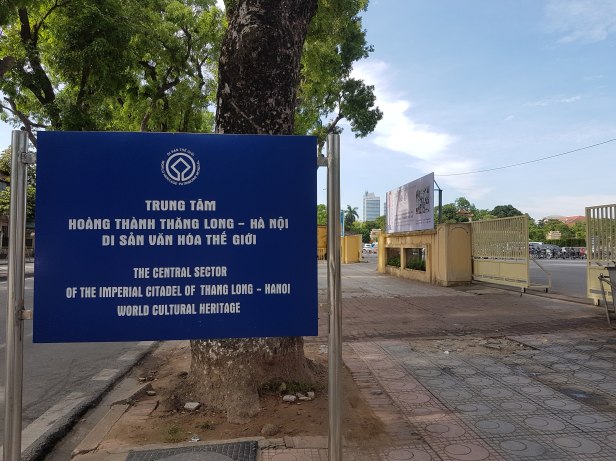 The sign post can be seen vividly: Welcome to Thăng Long citadel
FYI: Thăng Long (the rising dragon) is a Vietnamese former capital city, from 1010 until the start of Tây Sơn regime (1778). It is now situated in the middle of Hà Nội, the capital of Vietnam.
In 2010, my country celebrated “1000 years of Thăng Long – Hà Nội” in its biggest excitement. People enthusiastically told stories about that golden period. The Thăng Long history shall never be forgotten, with its triple victory against the Mongolian empire in the XIII century, or the vicious battle of emperor Quang Trung, which wiped out the Thanh regime’s invasion, spring 1789.
I’ve kept all the excitement ever since, to this day when I can see with my own eyes the stronghold of my country; to a time when I can actually walk on those paths, which my ancestors used to use, centuries ago.
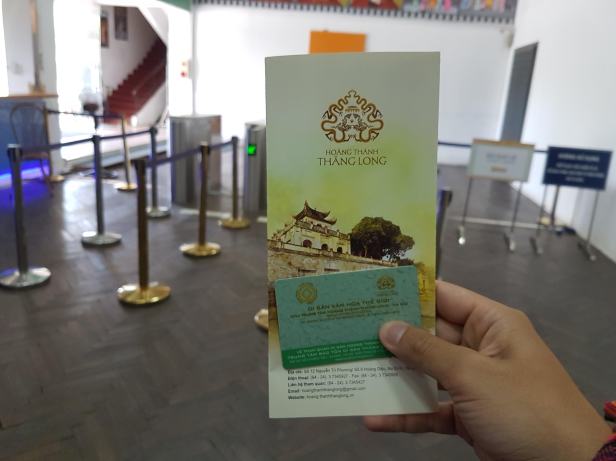 The entrance fee is 30,000VND. Maps are for free
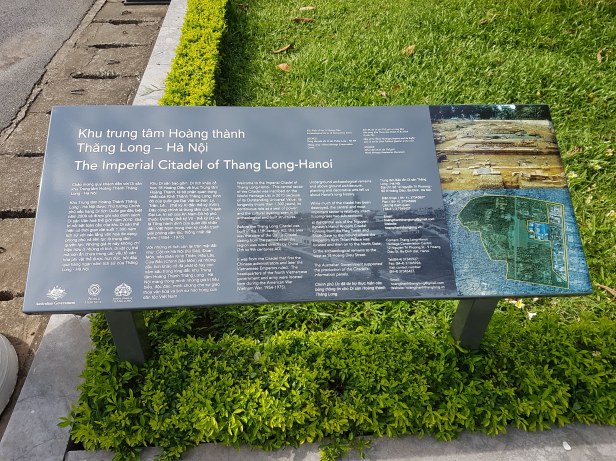 After getting through the check-ins, you will have to walk pass a big yard to reach the main sights
A little thing to remind you before this journey: Don’t expect too much, for there won’t be any gigantic palace to watch.
The reason for that is simple: In the XIX century, Thăng Long old citadel had been partly deconstructed, as a part of emperor Gia Long’s plan to strengthen its defense. Not long later, when the French people captured Thăng Long, they escalated the prior plan, and built up a more modern city, which was known as Hà Nội. Hence, almost 90% of the old citadel has been either disappeared, or buried under the ground.
It was not until the beginning of XXI century when Thăng Long’s first ruins were found, which led to one of the biggest archeology campaigns in Vietnam. Today, what you are about to witness here, are the achievements of that campaign.
Đoan Môn – South Gate
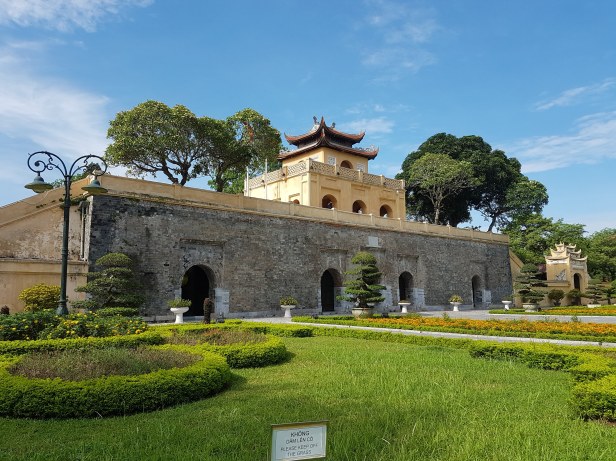 The overview of Đoan Môn
After walking through the yard, I arrived at Đoan Môn – the southern entrance to the forbidden city. Centuries ago, only the emperor can go pass this gate.
The feeling when walking inside the gate was somewhat very real: you can partly sense the royal atmosphere of a long forgotten time.
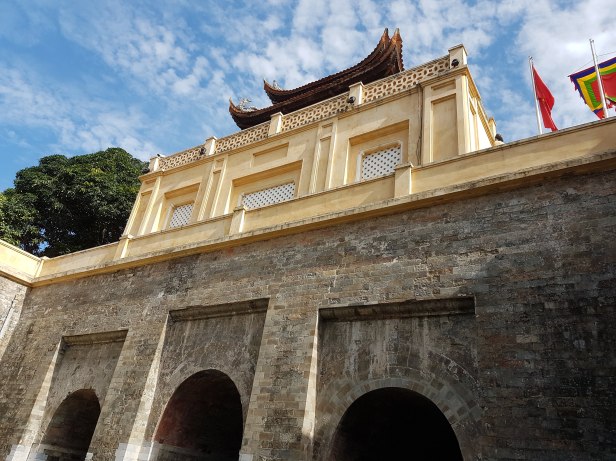 Đoan Môn has 2 storeys
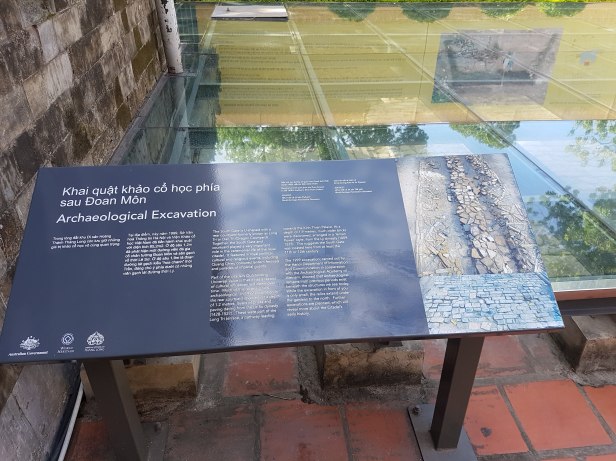 This glass ceiling offers a good view of the excavation
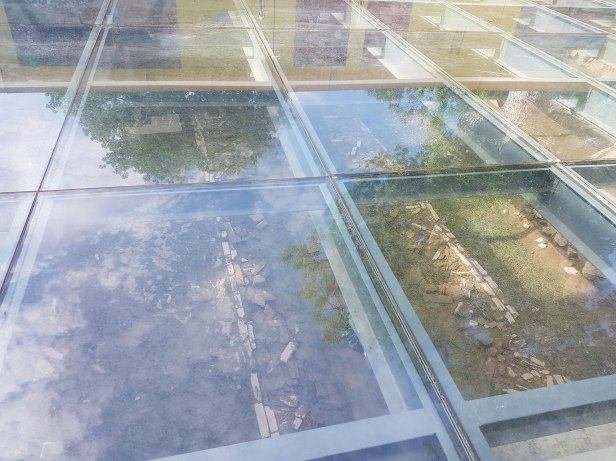 Paths from centuries ago are vividly shown
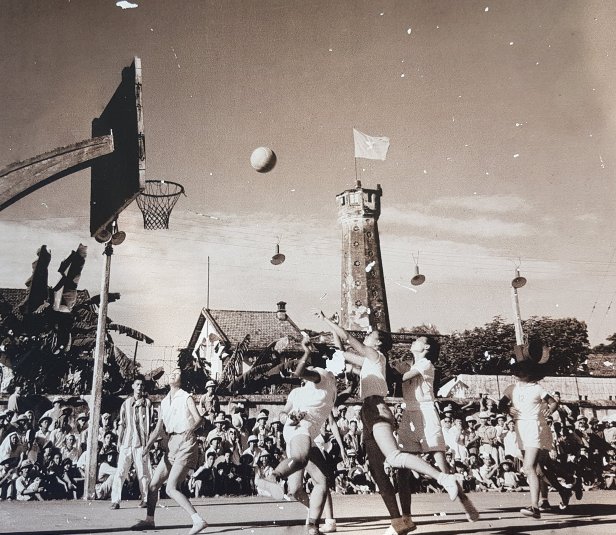 The first women’s basketball match, 1954. You can see these historical photos on the higher storey of Đoan Môn
The Museum
Such a big and professional excavation like Thăng Long requires a special place where relics can be displayed as its best shape.
In this small, cool museum, you will be guided through the flow of history, as well as to learn more about the last generations’ living habits.
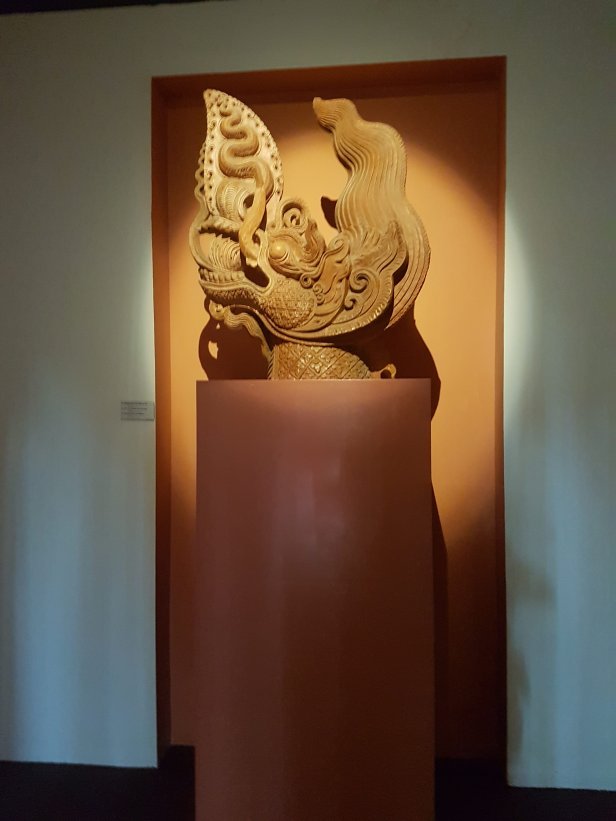 The Lý dynasty Dragon head sculpture
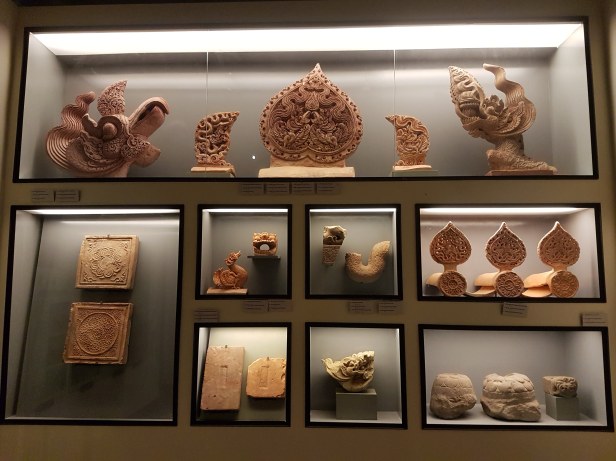 Most of the artifacts here are buildings’ parts, which reflects the way things were constructed
The stone dragons of the Kính Thiên palace
When you reach this sight, it can be quite confusing, as there should be no palace to be seen.
Why?
We will have to go back a little bit:
In the XV century, when the Vietnamese had finally gained freedom from the Ming dynasty (China), Lê Thái Tổ, the national hero, was declared to be the new emperor at Kính Thiên palace. Ever since, this building has become the most important place throughout the citadel, where people celebrated special rituals, welcomed ambassadors, and “thiết triều” – discussed national matters, between the king and his Mandarins.
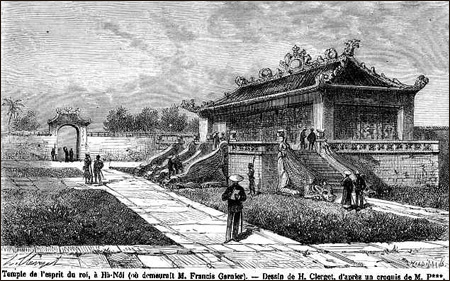 Kính Thiên palace (source: Wikipedia)
Technically, it’s similar to the Thái Hòa palace in Huế, or the Oval room in the White house.
Such crucial was the palace, but it either could not last, after the French invasion to Hà Nội.
 The palace was pulled down, and a new bunker appeared later (source: Wikipedia)
Until now, the palace’s ground, with 4 dragons, are all you can see.
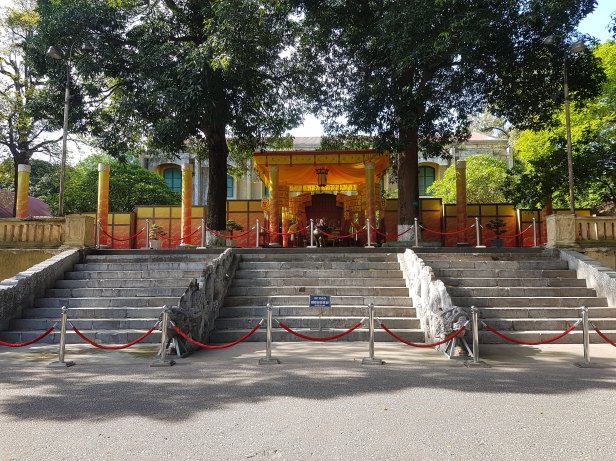 Today’s Kính Thiên palace remainings
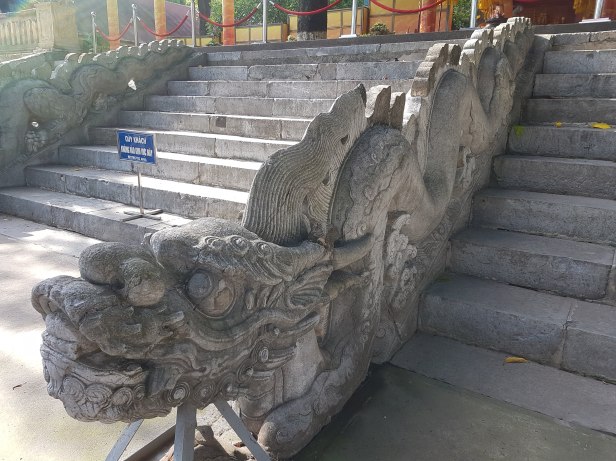 600 years old-ish dragons
Cửa Bắc – the North gate
From Đoan Môn (South gate) to Cửa Bắc (North gate), we technically have been through the Thăng Long imperial citadel.
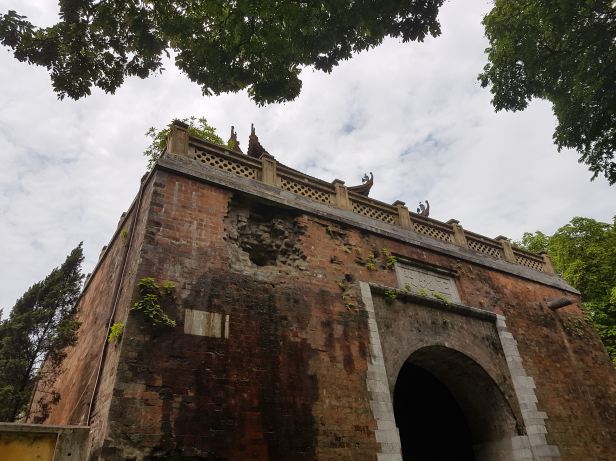 The north gate faces Phan Đình Phùng street
There is an amusing fact about streets naming in the Thăng Long’s surroundings: Phan Đình Phùng, Hoàng Diệu, Nguyễn Tri Phương… are all national heroes who sacrificed against the French colonial process, especially Nguyễn Tri Phương and Hoàng Diệu – The commanders of Hà Nội city during the invasions in 1873 1882-1884.
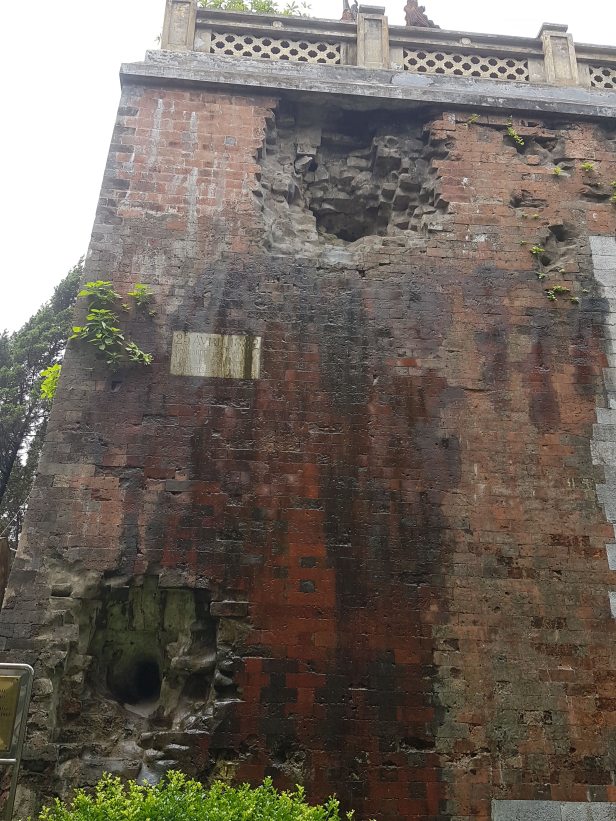 French bombard holes are still there on the gate
Despite being a part of the citadel, the North gate is not connected with the area. Thus, you’ll have to walk out of the excavation to reach this spot.
And last but not least: Kỳ Đài – Hà Nội flag tower
I know that Kỳ Đài should have been mentioned first, since its position is at the beginning of the citadel, even above Đoan Môn.
However, this flag tower is not counted as a part of the Thăng Long ruin, so I’ve considered it as an exception.
As a part of the nearby Army museum, Hà Nội flag tower is a special building, one of the symbols of Vietnamese capital city.
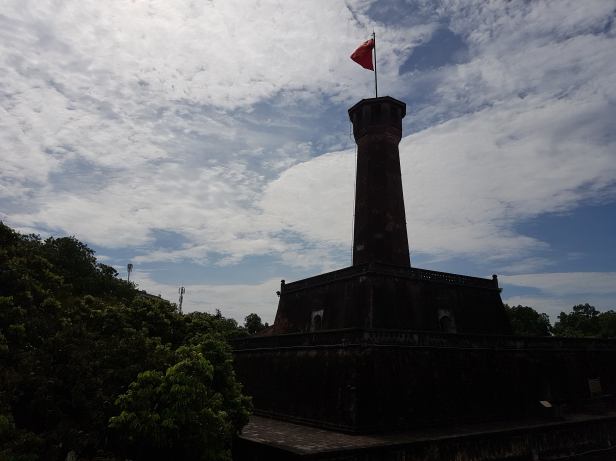 An overview of Kỳ Đài
Built in 1812, this is one of the really rare brick buildings of Thăng Long that are still existed today. After taking control of the city, demolishing the tower was planned by the French government. Fortunately, they decided to keep it as a horse-racing observation deck.
This 40-metres tower is still open for sight-seeing.
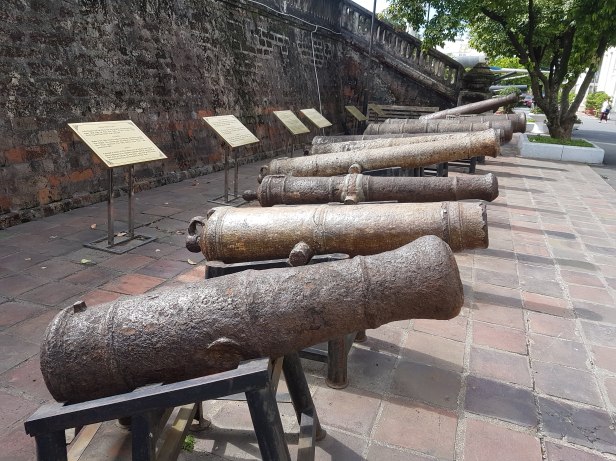
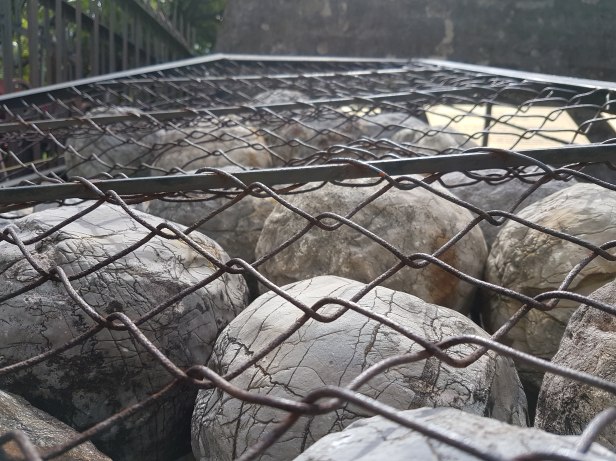 Cannons and their bullets are exhibited there
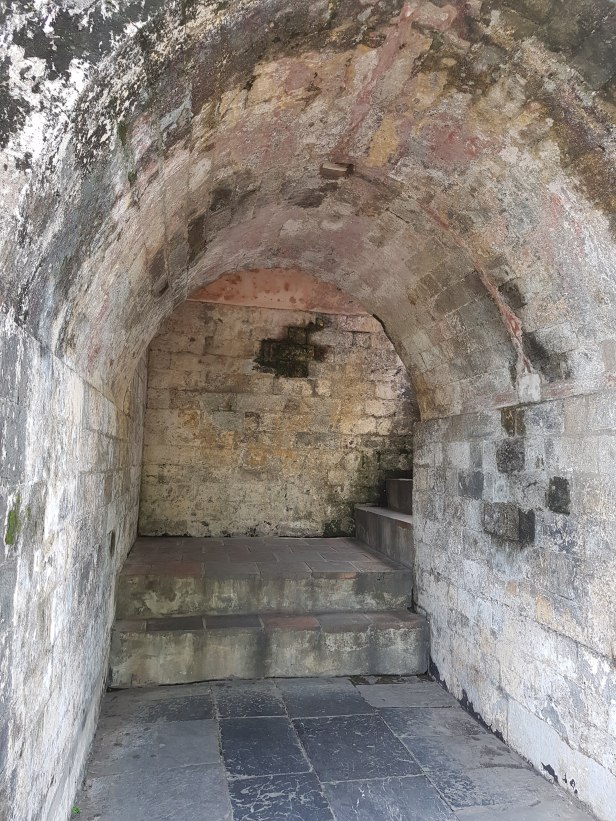 The very old brick way inside the tower’s platform
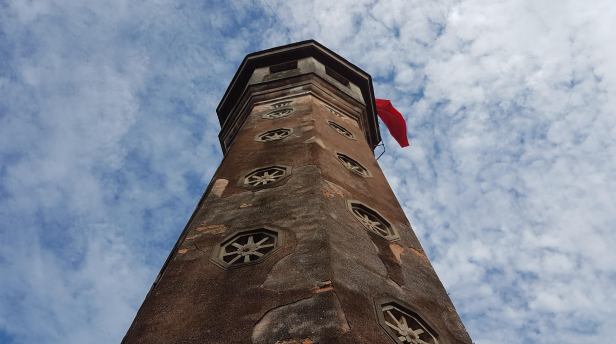 The main tower; you can not go inside this tower since it’s really old
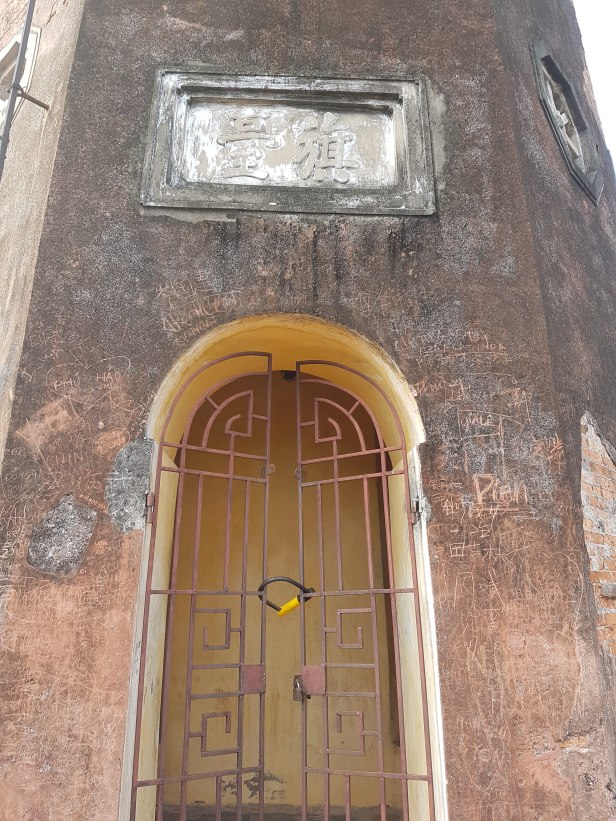 And this is the lock
Other places in the Thăng Long’s imperial citadel:
- In-progress site: The messy place where people are still digging in search of more artifacts.
- Hậu Lâu: the back palace for the queens and her children. This place is being reserved.
- The North Vietnam’s military offices: they were built in the XX century; thus, i didn’t mention them above.
In short, if you are into history, Thăng Long will be the perfect place for you here in Hà Nội. Though most of the old citadel has disappeared due to historical incidents, the best historians and archeologists are giving their best shot to bring it back.
Let’s hope that one day, the dragon shall rise again, from the ashes of war…
Khanh Tr.
 moink20.com